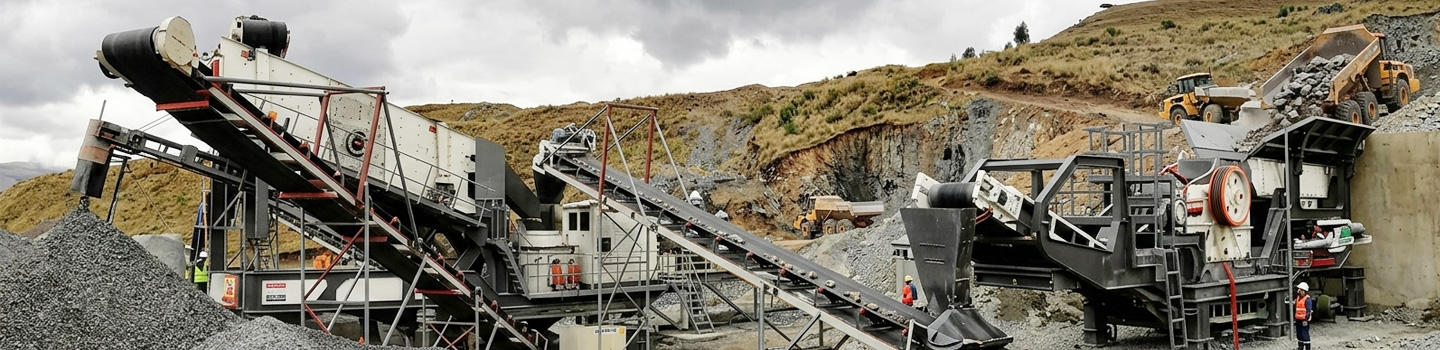
Modern mining operations increasingly require crushing solutions that combine processing flexibility, operational efficiency, and rapid deployment. As mining activities expand into decentralized locations and remote deposits, traditional stationary crushing plants can introduce significant transportation costs, installation delays, and infrastructure requirements. A portable crusher plant offers a practical alternative, providing integrated crushing and screening capabilities that can be relocated according to changing production demands.
Designed to process diverse materials, from high-strength iron ore and abrasive copper ore to softer limestone, advanced portable crushing configurations integrate K Series or C6X primary jaw crushers, HST or HPT hydraulic cone crushing units, and mobile screening equipment. These modular systems deliver adaptable production capacity, controlled material flow, and dependable performance across different mining environments.
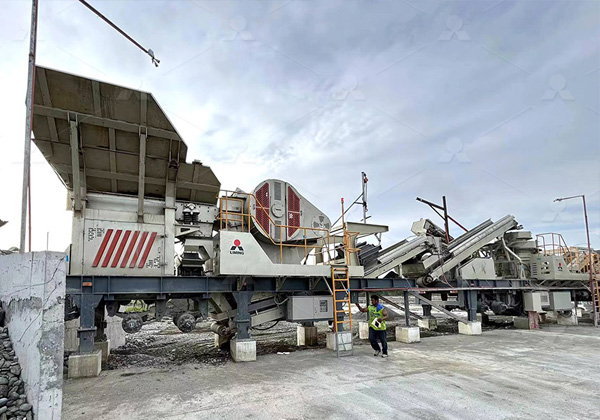
1. Complete Portable Plant Configurations
An effective portable crushing plant typically consists of three coordinated processing stages: primary crushing, secondary or tertiary crushing, and mobile screening. Each module performs a specific function while contributing to a balanced production circuit.
Primary Crushing: K Series and C6X Jaw Crusher Integration
The primary crushing stage reduces large run-of-mine material into manageable feed sizes. K Series mobile jaw crushing modules and C6X jaw crusher integration provide a suitable solution for handling large rocks with varying compressive strengths.
These jaw crushing configurations are particularly valuable in iron ore and copper mining, where incoming material may contain hard, irregular, and highly abrasive rock. Their robust crushing structures, optimized crushing chambers, and reliable mechanical components support consistent size reduction under demanding conditions.
The mobile configuration also minimizes the need for extensive civil construction. Operators can position the primary module close to the extraction area, reducing material transportation distances and improving overall site productivity.
Secondary and Tertiary Crushing: HST and HPT Hydraulic Cone Units
Following primary reduction, mobile hydraulic cone crushing units provide controlled secondary and tertiary processing.
HST single-cylinder hydraulic cone crushers and HPT multi-cylinder hydraulic cone crushers can be incorporated into mobile crushing configurations to accommodate different production requirements. Their hydraulic adjustment and protection systems help maintain stable operating conditions while supporting consistent product sizing.
For harder and more abrasive materials, such as iron and copper ores, cone crushing provides the strength and processing control required for demanding applications. For limestone and other moderately hard materials, appropriately configured crushing chambers and operating parameters can deliver efficient reduction without unnecessary energy consumption.
Hydraulic adjustment also simplifies discharge-setting changes, helping operators respond to variations in feed characteristics and final product specifications.
Integrated Mobile Screening Units
Mobile screening equipment completes the processing circuit by separating crushed material into specified size fractions. Oversized particles can be returned to the cone crusher, while correctly sized material proceeds to stockpiling or subsequent processing.
This arrangement creates a compact closed-circuit system that improves particle-size consistency, reduces unnecessary material handling, and maintains better control over finished product quality.
2. Versatility Across Different Ore Types
One of the principal advantages of portable crushing plants is their ability to process materials with significantly different mechanical characteristics.
Iron ore generally presents high strength and considerable abrasivity, requiring durable crushing chambers, wear-resistant liners, and reliable feeding systems. Copper ore can contain hard mineralized rock with variable fracture characteristics, demanding adaptable crushing configurations and effective wear management.
Limestone, by comparison, is generally softer and easier to process. Its lower crushing resistance allows appropriately selected configurations to achieve efficient production with reduced mechanical loading.
A modular portable plant can accommodate these differences through adjustments to crusher chamber selection, discharge settings, feed rates, screening specifications, and equipment combinations.
This versatility enables mining contractors and aggregate producers to deploy common mobile infrastructure across multiple projects rather than investing in separate fixed installations for every material type.
3. Rapid Relocation and Hydraulic Setup Efficiency
Mining locations frequently change as extraction progresses. Portable crushing equipment addresses this challenge through integrated chassis designs, transport-friendly configurations, and modular equipment arrangements.
K Series mobile plants are designed to simplify equipment transportation and site deployment. Hydraulic support systems facilitate equipment positioning and operational setup, reducing dependence on extensive manual installation procedures.
Once relocated, operators can complete the necessary mechanical connections, hydraulic positioning, electrical integration, and safety inspections before commissioning.
The ability to move crushing equipment closer to active extraction areas reduces haulage distances and allows production capacity to follow changing mining conditions. This is particularly valuable for smaller deposits, temporary mining contracts, and remote operations where permanent infrastructure may not be economically justified.
4. Compact Closed-Circuit Processing and Dynamic Feed Regulation
Production efficiency depends not only on individual crusher performance but also on coordination between processing stages.
An integrated portable plant uses screening feedback and controlled material distribution to maintain balanced operation. Oversized material is recycled, while correctly sized fractions are discharged independently.
Dynamic feed-rate regulation is particularly important when processing ores with inconsistent hardness, moisture content, or particle-size distribution. Controlled feeders help prevent crusher overloading, reduce unnecessary equipment idling, and maintain stable throughput.
By coordinating primary crushing, cone crushing, and screening capacities, operators can minimize bottlenecks and improve overall plant utilization.
5. Operational Uptime in Remote Mining Environments
Remote mining operations often face limited access to maintenance personnel, replacement components, and technical infrastructure. Equipment reliability is therefore essential.
Portable crushing plants benefit from robust structural designs, hydraulic protection systems, accessible maintenance points, and modular component arrangements. These features simplify routine inspections and help reduce maintenance-related interruptions.
Monitoring bearing temperatures, hydraulic pressure, lubrication conditions, vibration, and equipment loading can further support preventive maintenance strategies.
Standardized components and planned spare-parts inventories also help operators respond quickly to wear-related maintenance requirements, particularly when processing abrasive iron and copper ores.