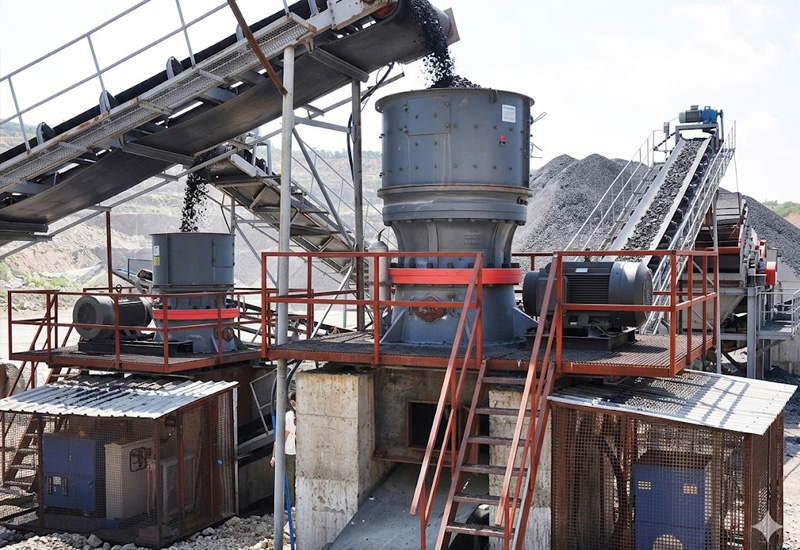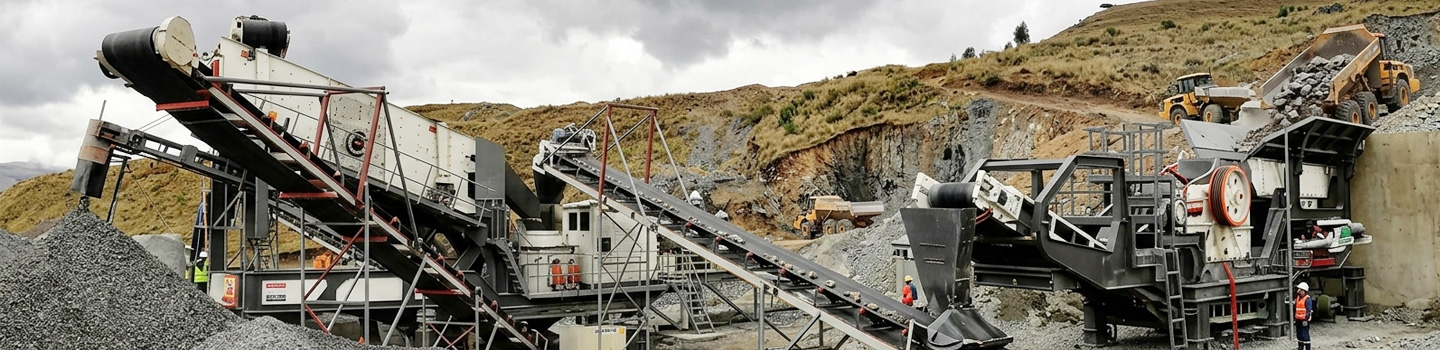
In medium-to-hard rock secondary crushing, the lowest purchase price is rarely the true measure of affordability. A cone crusher is a major capital asset, and its financial performance depends on more than initial procurement cost. Downtime, structural failures, unplanned component replacement, and production interruptions can quickly turn a seemingly economical machine into an expensive liability.
For operations conducting a capital risk audit, the more relevant question is therefore: Can the crusher deliver dependable production while protecting the value of the equipment over its operating life? Hydraulic cone crushers, including HST single-cylinder and HPT multi-cylinder designs, address this question by combining robust structural engineering with hydraulic protection and automated clearing functions.
Looking Beyond Upfront Procurement Value
Capital risk in secondary crushing is closely linked to the consequences of unexpected mechanical failure. Medium-to-hard rock can impose substantial impact and compressive loads on the crusher, particularly when uncrushable material enters the chamber. A low-cost machine with inadequate overload protection may expose the operator to damaged liners, shafts, bearings, frames, or other high-value components.
A reliable cone crusher should therefore be evaluated on total asset exposure, rather than purchase price alone. Procurement teams should consider the probability of catastrophic failure, the cost of replacement parts, recovery time, maintenance requirements, and the potential loss of production.
Hydraulic cone crusher designs provide an important layer of protection because the hydraulic system can respond to abnormal loads without relying solely on mechanical components to absorb the shock.
Hydraulic Accumulator Tramp Release as Capital Protection
One of the key protective features is the hydraulic accumulator tramp release system. When an uncrushable object enters the crushing chamber, excessive force can develop rapidly. Instead of allowing that force to transfer directly into critical structural and mechanical components, the hydraulic system provides controlled relief.
The accumulator stores hydraulic energy and enables the crusher to respond to overload conditions by allowing the crushing components to move away from the obstruction. Once the tramp material has passed, the system can return the components toward their operating position.
From a capital-risk perspective, this function is significant. It helps reduce the likelihood that a single tramp event becomes a major component failure. The economic benefit is not limited to avoiding a repair bill: preventing structural damage can also preserve production continuity and reduce secondary losses associated with extended downtime.
Heavy-Duty Cast Frames and Structural Integrity
Hydraulic protection is only one part of long-term reliability. The crusher’s frame must withstand repeated crushing forces throughout its service life. HST and HPT cone crusher designs emphasize heavy-duty structural construction intended for demanding applications.
A robust cast frame provides a strong load-bearing foundation around the crushing chamber. For operators processing abrasive and competent rock, this structural reserve can be an important element of asset protection. Repeated cyclic loading can expose weaknesses that may not be apparent during initial commissioning, making frame integrity a critical consideration during equipment selection.
A capital audit should therefore examine not simply whether a crusher can achieve the required reduction ratio, but whether its structural architecture is appropriate for the expected duty cycle, feed characteristics, and operating environment.