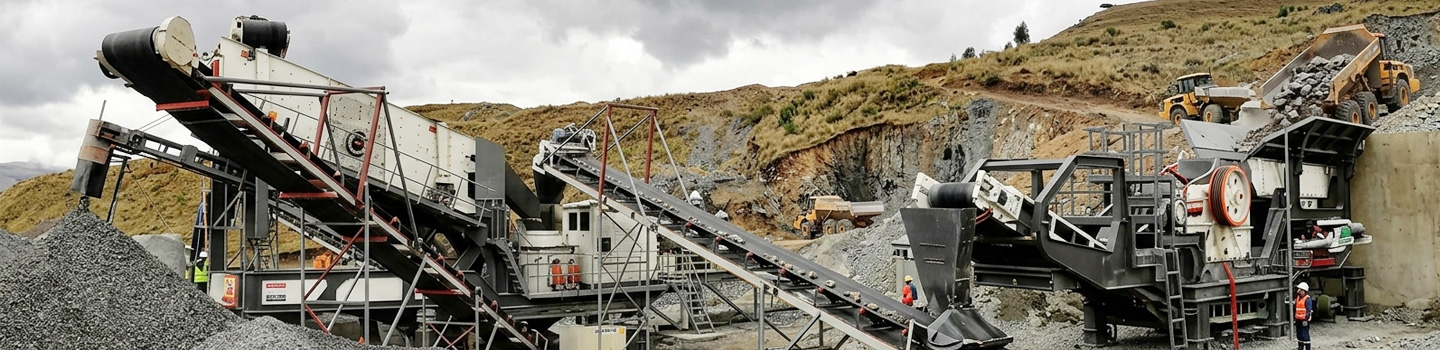
In modern mineral processing, selecting a crusher is rarely just a mechanical procurement decision; it is a critical metallurgical intervention. For decades, comminution—the process of reducing rock size—has remained the most energy-intensive stage of mineral processing, often consuming over 50% of a mine’s total operating costs.
To optimize this expense, the modern comminution circuit relies heavily on the “More Crushing, Less Grinding” (MCLG) paradigm. Because crushing reduces particle size via highly efficient compressive and impact forces rather than the inefficient attrition and shear forces utilized in tumbling mills, maximizing crusher performance directly shields downstream milling circuits from catastrophic energy loss.
The Downstream Impact: Shielding the Ball Mill
The core objective of a modern crushing circuit is to deliver an optimized Particle Size Distribution (PSD) to downstream grinding circuits. When a crushing circuit underperforms, delivering a coarser or highly variable product to a ball mill, the financial penalties compound rapidly.
[Primary / Secondary Crushing] ---> [Optimized PSD & Micro-fracturing] ---> [Maximizes Ball Mill Efficiency]
-
Comminution Efficiency: Crushing is thermodynamically much more efficient than grinding. A ball mill operating on an excessively coarse feed spends a disproportionate amount of energy performing basic size reduction rather than fine grinding.
-
Induced Micro-Fracturing: Beyond simple size reduction, high-pressure compressive crushing (particularly in modern cone crushers operating under choked-feed conditions) induces intense inter-particle stress. This stress creates micro-fractures along mineral grain boundaries. These micro-cracks significantly lower the apparent competency of the ore, allowing downstream ball mills to grind the rock much faster and with lower specific energy consumption ($kWh/t$).
-
Mitigating the “Critical Size” Accumulation: In Semi-Autogenous Grinding (SAG) circuits, poor upstream crushing can lead to an accumulation of “critical size” pebbles (typically 25–75 mm) that are too small to act as grinding media but too large to be easily broken by balls. Efficient secondary and tertiary crushing steps prevent these bottleneck sizes from destabilizing the circuit.
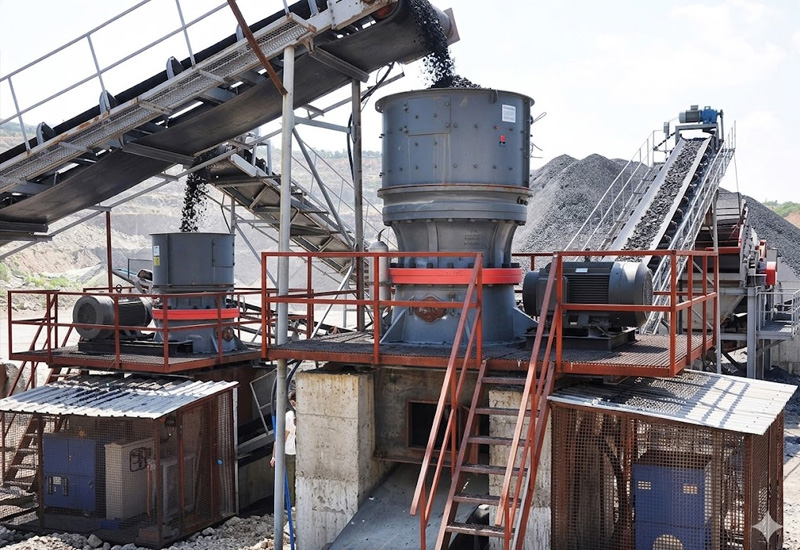
Hard Technical Inputs for Crusher Selection
Selecting the correct crusher topology requires moving past generic catalog capacities. The selection process must be dictated by four core metallurgical and physical parameters:
Bond Work Index (BWI)
The Bond Ball Mill Work Index (BWI), expressed in kWh/t, measures the ore’s resistance to crushing and grinding.
-
Low BWI (< 10 kWh/t): Soft, easily broken ores. Allows for wider flexibility in crusher selection and higher throughput rates per unit of crusher power.
-
High BWI (> 18 kWh/t): Highly competent, tough ores (e.g., certain iron ores, cherts, and quartzites). These require high-power, heavy-duty frames with high-torque eccentric drives. For hard ores, heavy-duty Jaw Crushers or Gyratory Crushers with rugged cast-steel frames are mandatory for the primary stage.
Abrasiveness Index (AI)
The Bond Abrasion Index (AI) quantifies the wear rate of metallic liners in contact with the ore. It directly dictates operating expenditures (OPEX) via liner replacement frequency.
-
Low to Moderate AI (< 0.4): Allows for the use of impact crushers (like HSI or VSI machines) in certain secondary or tertiary configurations.
-
High AI (> 0.6): Highly abrasive ores (rich in free silica or feldspars). Impact crushers face economically prohibitive wear rates here. High-AI applications strictly require compressive crushing mechanisms (Gyratory, Jaw, and Cone crushers) utilizing high-manganese steel liners (14-22% Mn) paired with chromium or molybdenum alloying elements to resist abrasive deformation.
Feed Moisture Variability
Ore moisture content drastically alters the flow dynamics within a crushing chamber.
-
Sticky/Wet Ores (> 5% moisture with high clay content): Standard jaw or cone crushers face severe risks of caking or packing in the crushing chamber, leading to choked chambers, mechanical stalling, or structural damage via ring bounce.
-
Mitigation: If high moisture variability is expected, the primary selection must favor Gyratory crushers (which handle sticky feeds better due to their large throw and steep cavity angle) or specialized Double-Roll Crushers / Mineral Sizers that utilize high-torque shear mechanisms to tear apart sticky, clay-rich materials without compacting them.
Target Product Particle Size Distribution (PSD)
The target PSD is determined by the downstream mineral liberation profile. The crushing circuit must deliver a product where the $P_{80}$ (the sieve size passing 80% of the mass) matches the optimal feed requirements of the mill.
-
If the downstream target requires a very tight, uniform PSD with minimal fines to prevent over-grinding, a Cone Crusher operating with a closed circuit (integrated with screens) is the industry standard.
-
Cone crushers operating under choked-feed conditions utilize inter-particle crushing, yielding a more cubical product shape with predictable fragmentation, which maximizes ball mill packing density and grinding performance.
Metallurgical Evaluation Matrix
The following matrix aligns ore characteristics directly with the appropriate industrial crusher categories to guide the initial selection process:
| Crusher Class | Primary Mechanism | Optimal Competency Range (BWI) | Abrasiveness Tolerance (AI) | Moisture Handling Capabilities | Metallurgical Function & Downstream Target |
| Gyratory Crusher | Continuous Compression | High to Very High (>18 kWh/t) | Excellent (>0.8) | Moderate; steep cavity prevents minor bridging | High-tonnage primary reduction; creates excellent micro-fracturing for downstream SAG mills. |
| Jaw Crusher | Intermittent Compression | Moderate to High (12-20 kWh/t) | Excellent (>0.8) | Poor; prone to packing if clay/moisture are high | Lower-tonnage primary reduction; highly reliable but produces a slightly slabby product shape. |
| Cone Crusher | High-Speed Compression | Moderate to Very High (>18 kWh/t) | Excellent (>0.8) | Strict limits (<4-5); wet fines cause chamber packing | Secondary/Tertiary reduction; maximizes inter-particle breakage to deliver an optimized P80 to the ball mill. |
| Mineral Sizer / Roll Crusher | Shear and Tension | Low to Moderate (<12 kWh/t) | Low to Moderate (<0.3) | Outstanding; easily processes sticky, high-clay feeds | Primary/Secondary reduction of soft or wet ores; minimizes dust and unwanted ultra-fines. |
| Vertical Shaft Impactor (VSI) | Impact (Rock-on-Rock or Rock-on-Anvil) | Low to High (Depends on rock-on-rock setup) | Moderate (Anvil) to High (Rock-on-rock) | Poor; wet fines cause build-up on rotor and internal walls | Tertiary/Quaternary shaping; produces highly cubical product and generates beneficial micro-fines for direct leaching. |
Engineering the Circuit Integration
A successful metallurgical circuit does not evaluate the crusher in isolation. Final engineering requires a holistic review of the surrounding infrastructure:
-
Screening Efficiency: The “More Crushing, Less Grinding” paradigm depends heavily on closing the circuit. Efficient vibrating screens must rapidly bypass material that already meets the target $P_{80}$, routing only the oversized material back to the secondary or tertiary crushers. This prevents energy waste from over-crushing and minimizes the creation of ultra-fines that can disrupt downstream flotation circuits.
-
Surge Capacities (Stockpiles and Bins): Primary crushers operate intermittently based on mine haul truck arrivals, whereas grinding circuits require a steady, unfluctuating mass flow. Adequately sized surge stockpiles and automated bin level controls ensure that secondary and tertiary cone crushers maintain a choked-feed condition—a prerequisite for optimizing inter-particle fragmentation and preserving liner life.
By shifting the procurement framework from mechanical capacity charts to a rigorous assessment of BWI, AI, moisture variations, and downstream PSD demands, operators can install a crushing circuit that does not merely break rock, but actively optimizes the economic efficiency of the entire extraction plant.