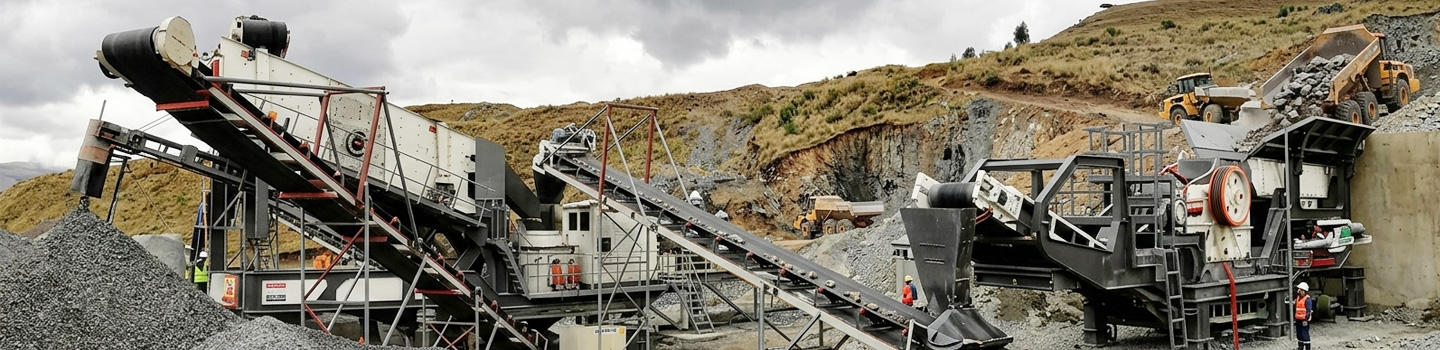
Rapid limestone crushing is essential for modern aggregate production, cement manufacturing, and industrial mineral processing. Because limestone is generally medium-hard and often exhibits relatively low abrasivity, it can be processed efficiently using high-capacity crushing equipment designed for substantial size reduction, consistent product quality, and minimal operational interruptions. Selecting the right combination of primary jaw crushers and heavy-duty impact crushers, such as the CI5X Series, helps operators streamline material flow, reduce unnecessary processing stages, and improve overall equipment effectiveness (OEE).
A well-designed crushing system does more than increase instantaneous throughput. It minimizes bottlenecks, shortens maintenance intervals, and ensures that equipment remains productive throughout the working day.
Primary Jaw Crushers: Establishing a High-Capacity Foundation
Primary jaw crushers are commonly used to process blasted limestone directly from the quarry. Their robust crushing mechanism, consisting of a fixed jaw and a moving jaw, breaks large feed material into manageable fragments for downstream processing.
For rapid limestone crushing, the primary jaw unit should feature a large feed opening, a rigid frame, and a high-capacity crushing chamber. These characteristics allow larger rocks to enter the machine while reducing the risk of bridging and blockage. A generous feed opening also accommodates variations in blasted rock size, helping maintain continuous operation.
Equipment selection should account for the maximum feed size, required throughput, and desired discharge dimensions. Properly sized jaw crushers can deliver a consistent feed to secondary equipment, preventing downstream crushers from becoming overloaded or underutilized.
Adjustable discharge settings provide additional flexibility. Operators can modify the product size to suit the requirements of the secondary crushing stage, balancing throughput against the reduction needed later in the process. Reliable bearings, accessible wear components, and effective lubrication systems further support dependable performance and reduce maintenance-related downtime.
CI5X Series Impact Crushers: High-Reduction Performance
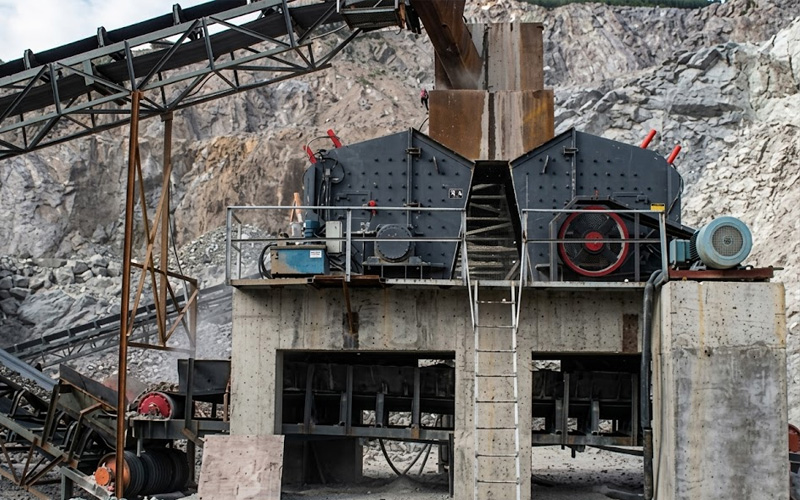
After primary crushing, heavy-duty impact crushers offer an effective solution for producing smaller, more uniform limestone aggregates. The CI5X Series is designed around high-performance impact crushing principles, making it a relevant option for applications requiring substantial size reduction and efficient material processing.
Impact crushers accelerate material using a high-speed rotor fitted with impact elements. Limestone strikes breaker plates or other impact surfaces, fractures, and continues through the crushing chamber until it reaches a suitable discharge size.
A key performance advantage is high rotor momentum. A well-engineered rotor and drive system help sustain crushing energy as material enters the chamber, supporting stable operation under varying feed conditions. This can improve the machine’s ability to handle demanding reduction duties, although actual performance depends on feed characteristics, rotor speed, chamber configuration, and installed power.
The CI5X Series also emphasizes a heavy-duty structural design and hydraulic adjustment features. Hydraulic systems can facilitate setting changes and, where the configuration supports it, help clear obstructions more rapidly than manual procedures. Faster access to normal operating conditions reduces the time equipment spends idle and enables operators to respond more efficiently to changes in feed material or product specifications.
For medium-hard, low-abrasivity limestone, impact crushing can provide an attractive balance between reduction efficiency and wear costs. Nevertheless, operators should monitor wear-part condition, moisture levels, and feed consistency to maintain reliable output.
Streamlined Configurations for Fewer Crushing Stages
The arrangement of crushing equipment is as important as the individual machines. A practical configuration combines a primary jaw crusher with a properly selected CI5X Series impact crusher, supported by appropriately sized screens, conveyors, and controlled feed systems.
In suitable applications, the impact crusher can achieve enough reduction in a single secondary stage to eliminate an additional crushing step. This simplifies the material-handling circuit, reduces the number of transfer points, and limits the energy and maintenance requirements associated with extra equipment.
However, the optimum arrangement depends on the target product gradation, maximum feed size, and required production rate. Closed-circuit screening may be necessary when precise particle sizing is essential. Screen oversize can return to the impact crusher, while correctly sized material proceeds to stockpiling or further processing.
A balanced flow architecture prevents bottlenecks by matching the capacities of the feeder, primary crusher, secondary crusher, screens, and conveyors. Consistent feeding is particularly important because surges and interruptions can reduce the effective production rate even when individual crushers have substantial nominal capacity.
Improving OEE Through Reduced Downtime
Overall equipment effectiveness combines availability, performance, and quality. High crushing capacity alone does not guarantee high OEE; the entire production system must operate reliably and produce material that meets specifications.
Several equipment features contribute directly to these objectives:
- Large feed openings: Reduce feed-size restrictions and help prevent blockages.
- High rotor momentum: Supports sustained impact energy and stable reduction performance.
- Hydraulic cavity clearing and adjustment: Can shorten recovery time after obstructions and simplify setting changes.
- Accessible maintenance points: Reduce inspection and component-replacement time.
- Efficient material-flow design: Minimizes unnecessary handling, idle time, and intermediate processing stages.
- Reliable screening and feed control: Improve product consistency and reduce recirculation caused by poor process balance.
Preventive maintenance, condition monitoring, scheduled wear-part replacement, and operator training remain essential. Tracking downtime causes, throughput, energy consumption, and rejected product allows plant managers to identify recurring losses and improve production planning.