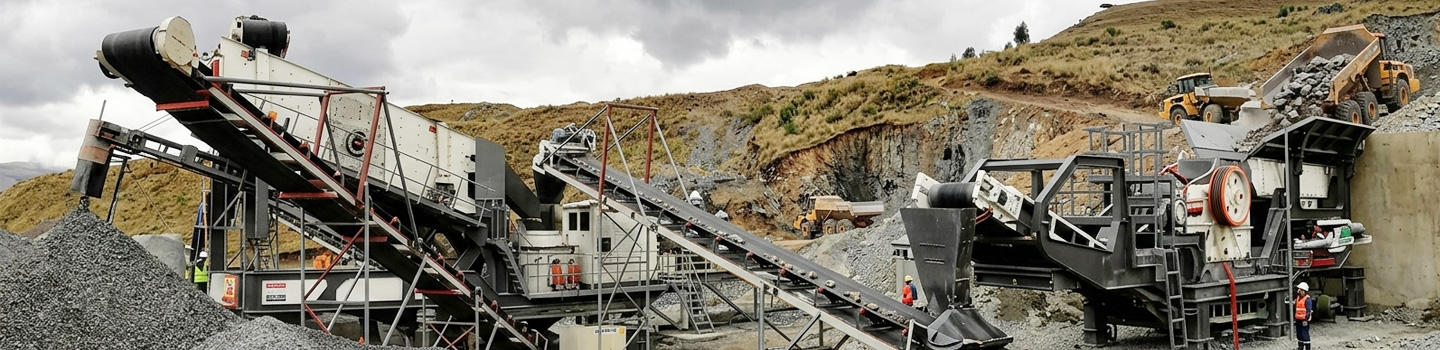
The demand for high-quality sand and construction aggregates continues to grow across infrastructure, road construction, mining, and commercial building projects. Traditional crushing and screening operations often require multiple machines, extensive material transportation, and considerable setup time. A portable rock crusher for sand separation offers a more efficient alternative by combining rock crushing, screening, and advanced material classification in an integrated mobile system.
Modern portable and mobile crushing plants are designed not only to reduce large rocks into smaller aggregates but also to separate sand into specific particle sizes while removing unwanted fines and dust. By integrating crushing and classification technologies into a single production line, contractors can improve material quality, reduce operating costs, and produce market-ready sand directly at the job site.
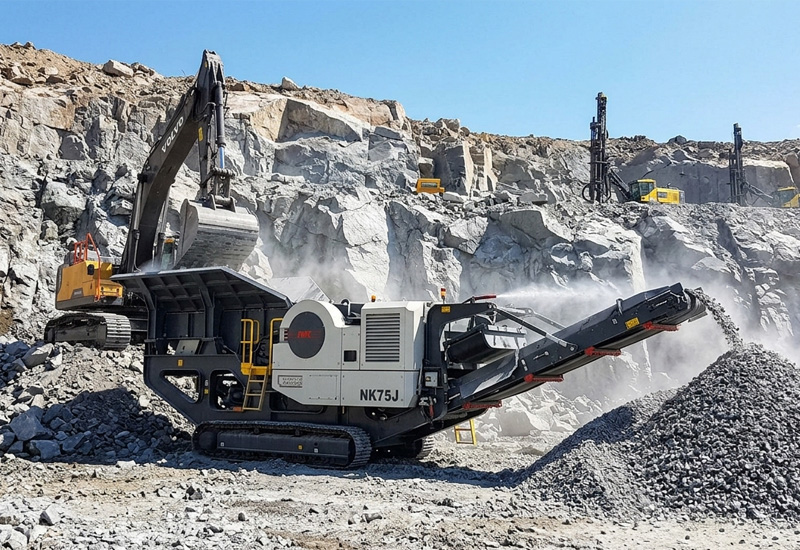
1. Integrated Portable Crushing and Screening Plants
An integrated portable crushing and screening plant provides a complete solution for simultaneous rock processing and sand separation. Rather than relying on independent crushing and screening equipment, these systems combine primary or secondary crushers with advanced classification modules on a mobile chassis.
Depending on the application, the plant can incorporate jaw crushers, impact crushers, cone crushers, vibrating screens, air classifiers, and washing units.
Each component performs a specific function:
- Rock crushers: Reduce raw rock, quarry stone, and recycled concrete into the required aggregate sizes.
- Vibrating screens: Separate crushed materials into different particle-size fractions, allowing fine sand, coarse sand, and larger aggregates to be collected independently.
- Air classifiers: Use controlled airflow to remove lightweight dust and excess ultrafine particles from manufactured sand.
- Washing units: Remove clay, silt, and other unwanted contaminants while improving the cleanliness of the final sand product.
These integrated systems allow operators to adjust the crushing and classification process according to project specifications. The result is a more consistent sand product, improved production efficiency, and fewer material-handling stages.
2. Controlling Fineness Modulus for Consistent Sand Quality
One of the most important considerations in sand production is controlling the fineness modulus (FM). This indicator describes the overall particle-size distribution of sand and helps determine whether the finished material meets the requirements of concrete production, asphalt manufacturing, or general construction.
A portable rock crusher equipped with adjustable screening and classification modules provides greater control over the final gradation.
Operators can modify screen configurations, crusher settings, and material recirculation rates to achieve the desired particle distribution. Oversized particles can be returned for further crushing, while appropriately sized sand is directed to the finished-product stockpile.
Maintaining a stable feed rate is equally important. Sudden variations in incoming rock size or production volume can affect screening efficiency and lead to inconsistent sand quality.
By continuously monitoring particle-size distribution and adjusting equipment settings, operators can maintain a more consistent fineness modulus and minimize product rejection.
3. Removing Excess Fines and Dust
Excessive fine particles and airborne dust can reduce the quality and commercial value of manufactured sand. High concentrations of ultrafine material may also affect concrete workability, water demand, and overall mix performance.
Advanced portable crushing and screening plants address this issue through integrated dust-removal and classification technologies.
Air classifiers are particularly useful for separating lightweight dust and ultrafine particles from manufactured sand. Adjustable airflow allows operators to control separation performance according to the characteristics of the feed material and the required product specifications.
For applications involving clay, silt, or other water-soluble contaminants, integrated sand washing systems provide an additional cleaning stage.
Dust suppression equipment, including water sprays and enclosed transfer points, can also help reduce airborne emissions during crushing and material transportation.
Combining appropriate classification, washing, and dust-control technologies helps produce cleaner, more uniform sand.
4. Managing Moisture Content During Sand Separation
Moisture content is another critical operational parameter. Wet feed material can cause fine particles to stick together, reducing screening accuracy and potentially blocking screen openings.
Portable crushing plants operating in humid environments or processing naturally damp materials should therefore incorporate moisture-management solutions.
Depending on production requirements, these may include drainage screens, dewatering screens, adjustable water-spray systems, and integrated washing and recycling circuits.
For dry processing applications, air classification is generally more effective when the feed material has a controlled moisture level. Excess moisture can cause fine particles to adhere to larger grains, making accurate separation more difficult.
Operators should regularly monitor incoming material conditions and adjust screening speed, airflow, and washing intensity accordingly. Effective moisture management helps maintain production stability and consistent finished-sand quality.
5. Mobility on Rugged Job Sites
The main advantage of portable rock crushers is their ability to operate close to the material source. Mobile crushing and screening plants are typically mounted on wheeled or tracked chassis, allowing them to move between quarries, construction sites, mining operations, and remote infrastructure projects.
Tracked systems are especially suitable for uneven terrain, muddy conditions, and rugged job sites. Their mobility reduces the need for extensive foundation preparation and minimizes the distance that raw materials must travel.
Wheeled configurations, meanwhile, offer convenient transportation between established processing locations and are often suitable for projects requiring frequent relocation.
A well-designed mobile plant also integrates conveyors, screening equipment, and classification modules into a compact footprint, helping maximize available working space.
6. Rapid On-Site Setup and Operational Efficiency
Fast installation is essential for projects operating under tight construction schedules. Modern mobile crushing and screening plants are engineered for rapid deployment, with integrated equipment layouts, hydraulic folding conveyors, modular connections, and accessible maintenance points.
These features reduce assembly requirements and help operators bring the production line into service more quickly.
Automated control systems can further improve efficiency by coordinating crusher operation, screen performance, conveyor speeds, and material flow. Real-time monitoring also helps identify production irregularities before they develop into costly equipment interruptions.
When selecting a portable rock crusher for sand separation, buyers should evaluate processing capacity, feed-size requirements, finished-product specifications, power consumption, maintenance accessibility, and transportation limitations.