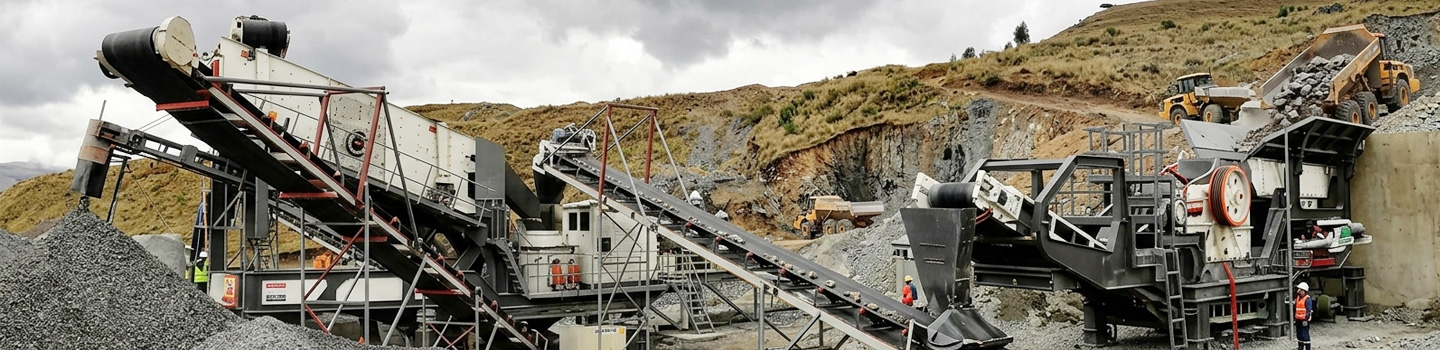
Entering the manufactured-sand market with granite requires more than comparing the purchase prices of crushing machines. Granite is hard, and a high quartz content increases abrasive wear, making rotor tips, liners, energy consumption and maintenance frequency major components of the project’s total cost of ownership (TCO). For quarry operators evaluating a VSI6X Series Vertical Shaft Impact Crusher alongside a CI5X Impact Crusher, the key question is therefore the cost of producing a saleable tonne of specification-grade manufactured sand—not simply the equipment’s initial price.
CAPEX: The Machine Is Only Part of the Investment
The capital expenditure (CAPEX) for a granite sand-making project normally includes the crusher, vibrating feeder, screens, conveyors, electrical equipment, dust-control systems, foundations and installation. A CI5X can serve as a high-capacity primary or secondary crushing stage, while the VSI6X is particularly relevant to tertiary shaping and manufactured-sand production.
The VSI6X range covers several capacities. For example, published specifications put the VSI6X1040 at approximately 264–283 t/h for sand making and 400 kW installed power, while the larger VSI6X1263 is rated around 454–486 t/h and 630 kW. The CI5X range is considerably broader, with published capacities from roughly 110 to 2,100 t/h and power ratings starting at 160 kW, depending on model.
For budgeting, operators should obtain turnkey quotations rather than apply the crusher purchase price directly to CAPEX. As an illustrative planning assumption, a complete granite manufactured-sand circuit can easily require several times the cost of the crusher itself once screening, conveying, electrical work, civil construction and dust management are included.
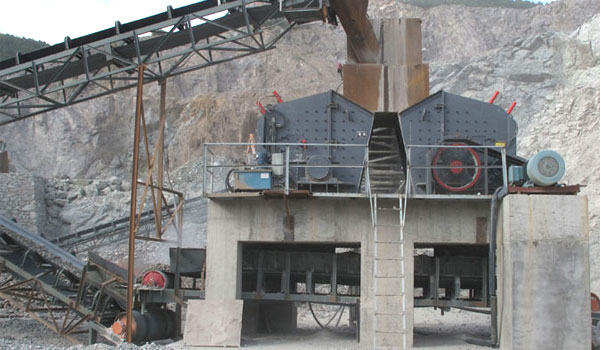
OPEX: Quartz Can Dominate Wear Costs
Granite’s quartz content is particularly important. Quartz is harder than normal steel, and published quarrying literature identifies increasing free-silica content as an indicator of greater sliding abrasiveness. Consequently, two quarries operating identical crushers can experience substantially different wear costs.
For a VSI, rotor tips are among the components most directly exposed to abrasive material. Rock-on-rock operation can reduce direct metal-to-rock contact, while rotor tips, distributor plates and internal wear plates still require regular inspection and replacement. In rock-on-anvil configurations, the anvil ring and blocks become major wear surfaces because high-velocity material repeatedly impacts them.
Published industry estimates illustrate the scale of the difference: one recent cost guide places granite VSI wear consumption at approximately $0.05–$0.20/t in rock-on-rock operation, compared with substantially higher figures for conventional impact crushing. These figures should be treated as indicative rather than guaranteed site costs because feed size, quartz percentage, rotor speed, reduction ratio and wear-part metallurgy can materially change results.
Energy Cost per Tonne
Power consumption must be calculated against saleable manufactured sand rather than crusher throughput alone. A VSI6X1040, for example, has approximately 400 kW of installed crusher power. At a hypothetical 275 t/h gross throughput and 80% electrical utilization, the crusher’s direct electrical demand would be approximately 1.16 kWh/t before accounting for screens, conveyors, recirculation and other plant equipment.
A high-quartz feed can also increase circulating load if the operator targets a tight 0–5 mm grading envelope. Consequently, the economically relevant metric is total plant kWh per saleable tonne.
Maintenance Intervals and Downtime
Maintenance costs include wear parts, bearings, lubrication, inspections and lost production. VSI wear components require particular attention because rotor imbalance or uneven wear can reduce efficiency and increase mechanical stress. Manufacturer-independent wear guidance recommends regular inspection and emphasizes that rotor tips, lower wear plates, distributor plates and feed tubes are among the most exposed components.
Granite operators should therefore establish wear measurements and inspection intervals from actual site data rather than relying on generic replacement schedules. A planned shutdown that replaces wear parts before catastrophic failure can be financially preferable to an unplanned stoppage during peak production.