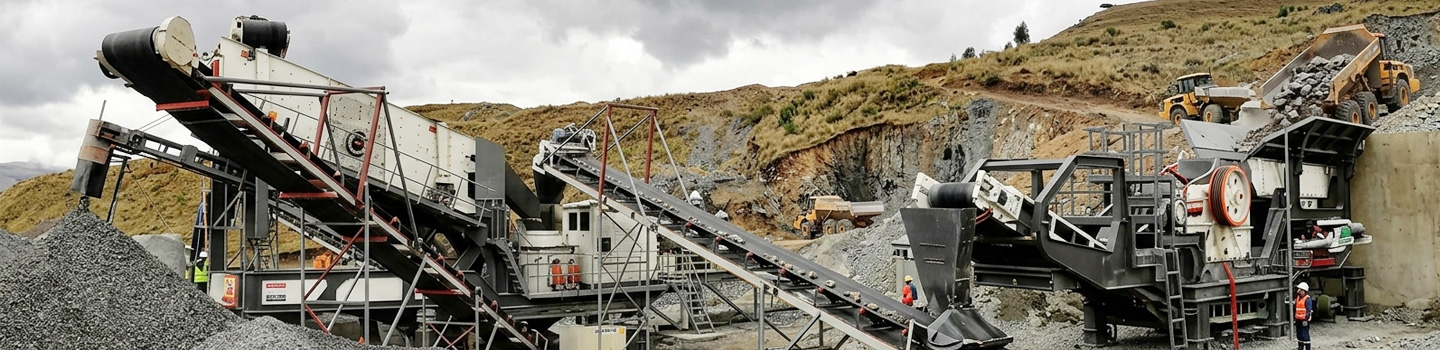
Mining operations are increasingly moving toward flexible, rapidly deployable crushing solutions that can respond to changing ore locations and production requirements. In high-hardness metal mining environments, where iron ore, copper ore, and gold ore often require substantial crushing energy, portable crushing plants provide a practical alternative to conventional fixed installations. The NK and K Series Mobile Crushing Plants combine site-to-site mobility, rapid commissioning, flexible equipment configurations, and high-throughput processing to help mining operations shorten setup times and maintain continuous material flow.
Rapid Deployment at Remote Mining Sites
One of the most significant advantages of portable crushing plants is their ability to operate without the extensive civil construction normally associated with fixed crushing stations. Conventional plants can require concrete foundations, structural steel, utility installation, and lengthy site preparation before commissioning. At remote mineral deposits, these requirements can delay production and increase infrastructure costs.
NK and K Series Mobile Crushing Plants are designed to reduce these barriers. Their mobile configurations allow crushing equipment to be transported directly to the working area and positioned with comparatively limited site preparation. By bypassing extensive civil foundation construction, operators can move from equipment arrival to commissioning much faster.
This capability is particularly valuable when mining operations develop new ore zones or temporary deposits. Instead of constructing a permanent crushing station for every production area, a mobile plant can follow the mining face as extraction progresses. The result is a more adaptable crushing operation that can respond quickly to changes in mine planning.
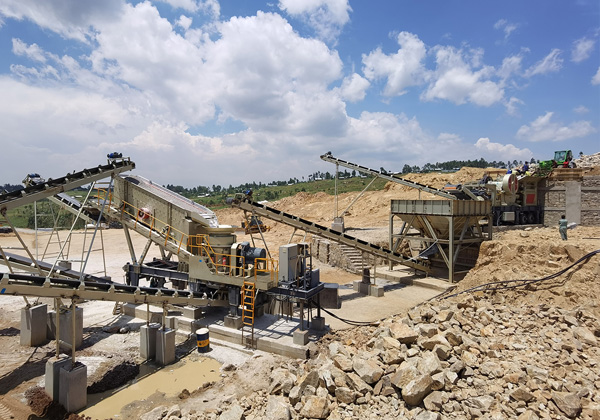
Mobility for Site-to-Site Crushing
Ore deposits are rarely static from an operational perspective. Mining areas expand, production benches shift, and extraction priorities change as geological conditions develop. A fixed crusher may eventually become separated from the active mining area, increasing haulage distances and associated material-handling requirements.
Portable crushers address this challenge through site-to-site mobility. NK and K Series Mobile Crushing Plants can be relocated as mining conditions change, allowing the crushing process to remain closer to the source of extracted ore. Shorter material-hauling routes can support a more streamlined workflow between excavation, crushing, screening, and downstream processing.
For iron ore, copper ore, and gold ore operations, this flexibility is especially relevant where high production volumes and challenging terrain make efficient material movement essential. Mobile crushing also enables operators to deploy equipment across multiple deposits or production zones without committing to a separate permanent crushing infrastructure at every location.
Flexible Jaw and Cone Crushing Configurations
High-hardness ores place demanding requirements on crushing equipment. Iron ore and many copper and gold ores can contain highly abrasive and competent rock that requires robust primary and secondary crushing stages. A major benefit of mobile plant configurations is the ability to integrate different crushing units according to the characteristics of the feed material and required product size.
Jaw crushers are commonly used for primary reduction, handling large run-of-mine material and reducing it to a manageable size. Cone crushers can then provide secondary or tertiary reduction where finer and more controlled particle sizes are required. Depending on the application, mobile configurations can incorporate jaw and cone crushing units into a coordinated processing circuit.
This modular approach allows crushing capacity and equipment selection to be aligned with the orebody, production target, and downstream processing requirements. Instead of designing every operation around a single fixed configuration, mine operators can adjust the crushing arrangement as conditions evolve.
High Throughput for Faster Mineral Recovery
In metal mining, crushing is a critical link between extraction and mineral processing. If crushing capacity becomes a bottleneck, the entire production chain can be affected. High-throughput mobile crushing plants help maintain a steady supply of appropriately sized material for subsequent screening, grinding, beneficiation, or recovery processes.
For iron ore, efficient size reduction supports downstream separation and handling. In copper and gold operations, effective crushing prepares ore for subsequent grinding and mineral recovery stages. By positioning mobile crushers closer to active mining areas and reducing unnecessary material handling, operations can establish a more direct flow from excavation to processing.
The combination of rapid deployment, mobility, and high-capacity crushing can therefore contribute to shorter production cycles and improved utilization of downstream equipment. Faster commissioning also means that newly developed deposits can begin contributing to production sooner, while mobile relocation allows crushing capacity to follow changing mining priorities.
Supporting More Agile Mining Operations
NK and K Series Mobile Crushing Plants provide a flexible approach to crushing high-hardness metal ores. Their ability to minimize foundation requirements, move between operating locations, and integrate jaw or cone crushing units makes them suitable for dynamic mining environments.
For iron ore, copper ore, and gold ore producers, this mobility can transform crushing from a fixed infrastructure constraint into a more adaptable production asset. By bringing high-throughput processing closer to the ore source and accelerating deployment at remote deposits, portable crushing technology supports a faster, more responsive path from extraction to mineral recovery.