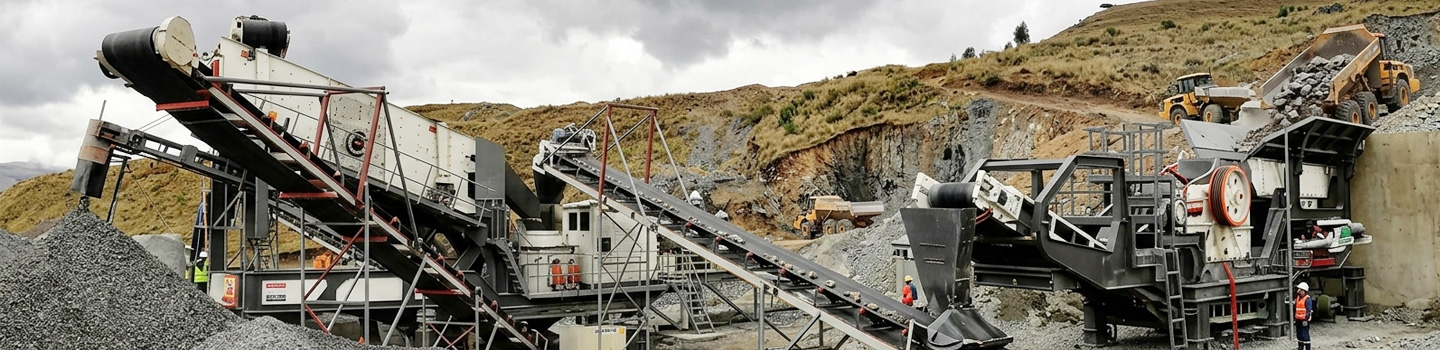
Crushing high-hardness rock ores is one of the most challenging tasks in the mining and construction industries. Rocks like granite, basalt, quartzite, and some metallic ores require specialized equipment to break them efficiently while maintaining production efficiency and minimizing wear on machinery. Selecting the right crusher is critical for both operational performance and economic viability.
Types of Crushers for High-Hardness Ores
High-hardness ores require crushers that are robust, wear-resistant, and capable of handling large-scale operations. The most commonly used crushers include:
1. Jaw Crushers
Jaw crushers are primary crushers widely used for coarse crushing of hard materials. They operate on the principle of compressive force, using a fixed jaw and a moving jaw to crush material.
Advantages:
-
Strong crushing ability for high-hardness rocks
-
Simple structure and easy maintenance
-
Suitable for primary crushing
Applications:
-
Granite, basalt, iron ore, and copper ore
2. Cone Crushers
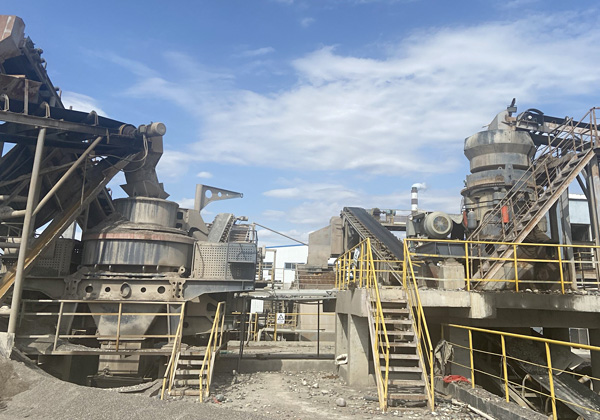
Cone crushers are secondary or tertiary crushers suitable for crushing hard and abrasive rocks. They use a rotating mantle inside a stationary concave to crush materials with a combination of compression and shear forces.
Advantages:
-
High efficiency and uniform particle size
-
Hydraulic adjustment for output size control
-
Durable for long-term operations with proper wear-resistant materials
Applications:
-
Granite, gabbro, manganese ore, and other hard ores
3. Impact Crushers (Heavy-Duty)
Impact crushers use high-speed impact force to break rocks. For high-hardness ores, heavy-duty or “reversible” impact crushers are preferred, often lined with high-manganese steel to resist wear.
Advantages:
-
Produces cubic-shaped aggregates
-
Suitable for secondary or tertiary crushing
-
High throughput for certain types of ores
Applications:
-
Quartzite, basalt, and concrete aggregate production
4. Gyratory Crushers
Gyratory crushers are ideal for large-scale primary crushing of hard ores. They operate similarly to cone crushers but can handle larger feed sizes and higher capacities.
Advantages:
-
Continuous operation with high capacity
-
Excellent for crushing very hard ores
-
Long service life with durable wear parts
Applications:
-
Large mining operations for iron, copper, and gold ores
Key Features to Consider
When choosing a crusher for high-hardness rock ores, several factors are critical:
-
Material Hardness: Ensure the crusher can handle the Mohs hardness of the ore.
-
Capacity Requirements: Match the crusher to production needs (tons per hour).
-
Wear-Resistance: Use manganese steel or alloy materials for wear parts to reduce downtime.
-
Adjustability: Crushers with hydraulic or mechanical adjustment allow precise control of output size.
-
Maintenance Ease: Crushers designed for easy maintenance reduce operational costs.
Crushing high-hardness rock ores is a demanding task that requires careful selection of crushers. Jaw, cone, impact, and gyratory crushers each have unique advantages depending on the hardness, size, and required output of the material. By choosing the right crusher and maintaining its components properly, mining and construction operations can achieve higher efficiency, lower costs, and longer equipment life.