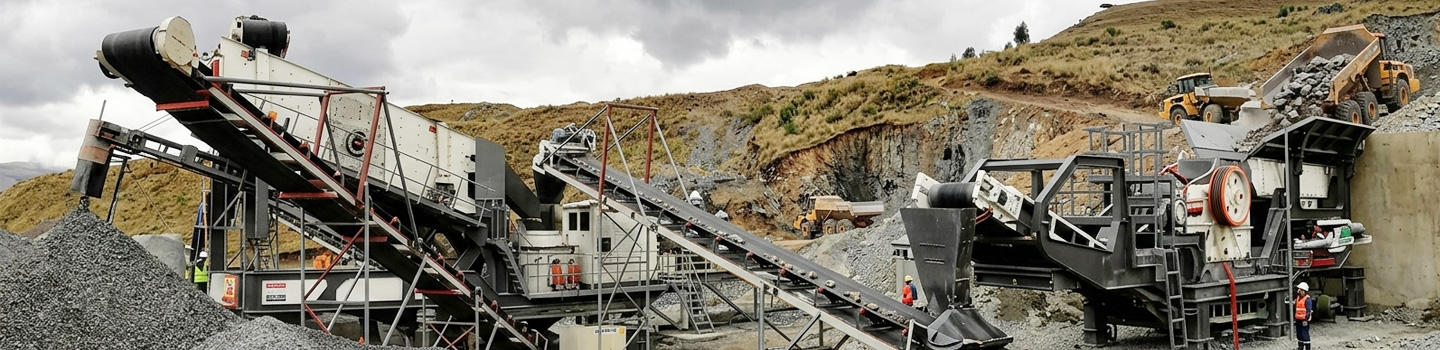
Choosing between a jaw crusher and a hydraulic cone crusher is an important economic decision for any aggregate producer or mining operation. While jaw crushers generally require a lower initial investment, cone crushers can deliver lower production costs per ton in secondary and tertiary crushing applications. The most economical choice therefore depends not simply on equipment purchase price, but on total cost of ownership (TCO), energy consumption, wear-part expenses, maintenance requirements, production capacity, and final product quality.
1. Initial Investment: CAPEX Comparison
Jaw crushers typically have a lower purchase price and simpler mechanical construction than hydraulic cone crushers. Their straightforward design, robust frame, and relatively uncomplicated crushing mechanism make them attractive for operations with limited initial capital budgets.
The C6X Series jaw crusher, for example, is designed for demanding primary crushing applications. Its heavy-duty construction and optimized crushing chamber support reliable processing of large feed materials while maintaining operational efficiency.
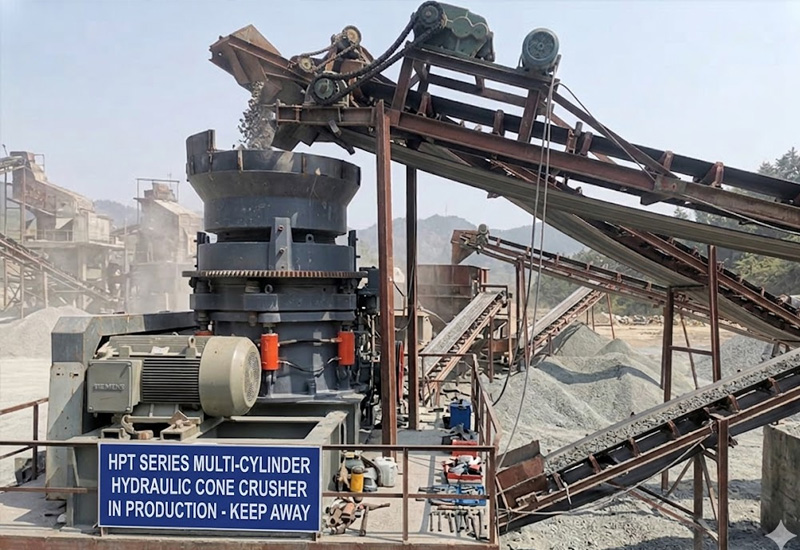
Hydraulic cone crushers, including the HST single-cylinder and HPT multi-cylinder series, generally involve higher initial investment. Their hydraulic systems, precision components, and more sophisticated crushing mechanisms increase equipment costs. However, these features provide greater control over discharge settings, improved crushing performance, and higher-quality finished aggregates.
CAPEX verdict: Jaw crushers are generally more economical when the priority is minimizing initial investment, particularly in primary crushing installations. However, purchase price alone does not determine long-term profitability.
2. Energy Consumption and Operating Costs
Energy consumption is a major component of crusher operating expenditure (OPEX). The relevant performance indicator is specific energy consumption, measured in kilowatt-hours per ton (kWh/t).
Jaw crushers use compression between a fixed jaw plate and a moving jaw plate. They are particularly effective at breaking large, coarse rocks and achieving substantial size reduction in primary crushing. Their relatively simple operating mechanism makes them suitable for processing large feed materials efficiently.
Cone crushers also use compression, but their continuous crushing action allows them to process material more consistently. In secondary and tertiary applications, hydraulic cone crushers can achieve higher throughput and better particle-size distribution.
Although actual energy consumption varies with rock hardness, feed size, moisture content, crusher settings, and operating conditions, cone crushers can offer lower energy consumption per ton of finished product when operating within their optimal application range.
Another important consideration is the entire crushing circuit. Producing poorly shaped or oversized particles increases screening and recirculation requirements, consuming additional electricity. By generating more consistent products, HST and HPT cone crushers can reduce unnecessary processing and improve overall plant energy efficiency.
3. Wear-Part Costs: Jaw Dies vs. Cone Liners
Wear-part consumption directly affects the cost per ton of crushed material.
Jaw crushers primarily use high-manganese steel jaw plates. These components withstand substantial impact and compression forces during primary crushing. Their replacement cost is generally straightforward to calculate, but abrasive rock, excessive feed hardness, and incorrect operating settings can accelerate wear.
Hydraulic cone crushers use mantles and bowl liners to form the crushing chamber. These wear components experience continuous abrasive contact with the processed material. Their service life depends on material characteristics, chamber design, feed distribution, and operating conditions.
Although cone crusher liners may have higher individual replacement costs, their economics can be favorable because of higher production rates and potentially longer service intervals under suitable conditions.
The most meaningful comparison is therefore wear-part cost per ton rather than the purchase price of individual liners.
For example:
Wear cost per ton = Total wear-part expenditure ÷ Total tons produced
This calculation allows operators to compare jaw dies, cone mantles, and bowl liners using actual production records rather than assumptions.
4. Maintenance and Operational Downtime
Maintenance costs include labor, replacement components, lubrication, inspections, and lost production during equipment shutdowns.
Jaw crushers have relatively simple mechanical structures, making routine maintenance and troubleshooting more straightforward. Their main maintenance requirements include inspecting jaw plates, bearings, lubrication systems, and drive components.
Hydraulic cone crushers have more sophisticated systems, including hydraulic adjustment and protection mechanisms. These systems require appropriate maintenance practices and trained personnel. However, hydraulic adjustment and overload protection can simplify certain operations and reduce the consequences of uncrushable material entering the chamber.
The HST and HPT Series incorporate hydraulic technologies designed to improve operational convenience and equipment protection.
When evaluating downtime, operators should consider not only maintenance frequency but also the financial impact of lost production. A crusher with higher maintenance expenses may still be more economical if it delivers greater availability and production capacity.
5. Production Efficiency and Final Aggregate Quality
The crushing stage is perhaps the most important factor when comparing economic performance.
Jaw crushers are particularly effective in primary crushing, where large rocks must be reduced to manageable sizes. The C6X Series is suited to coarse feed materials and demanding primary-breaking applications.
However, jaw crushers generally produce a wider particle-size distribution and less consistently cubical particles than properly configured cone crushers.
In secondary and tertiary crushing, HST single-cylinder and HPT multi-cylinder hydraulic cone crushers offer significant advantages. Their optimized crushing chambers and continuous compression action support higher production efficiency and improved particle shape.
Better particle shape can increase the proportion of saleable aggregate, particularly when producing high-quality construction materials. It can also reduce recirculating loads, unnecessary screening, and additional crushing requirements.
Consequently, a cone crusher may achieve a lower cost per saleable ton even when its initial investment and individual wear-part costs are higher.
6. Which Crusher Offers the Best Total Cost of Ownership?
The following comparison summarizes their typical economic advantages:
| Cost factor | Jaw crusher | Hydraulic cone crusher |
|---|---|---|
| Initial CAPEX | Generally lower | Generally higher |
| Primary crushing | Excellent | Usually less suitable |
| Secondary/tertiary crushing | Application-dependent | Excellent |
| Energy efficiency | Strong in primary breaking | Strong in secondary/tertiary applications |
| Wear components | High-manganese jaw dies | Mantles and bowl liners |
| Maintenance complexity | Relatively simple | More sophisticated |
| Aggregate shape | Generally less cubical | Generally more cubical |
| Cost per saleable ton | Competitive in primary crushing | Often lower in secondary/tertiary crushing |
Total cost of ownership should include equipment depreciation, electricity, wear components, maintenance labor, downtime, and the cost of processing material that does not meet product specifications.
Conclusion
So, which is more economical: a jaw crusher or a cone crusher?
The answer depends on the crushing stage. For primary crushing of large, coarse rocks, a jaw crusher such as the C6X Series is generally the more economical choice because of its lower initial investment, robust construction, and effective size reduction.
For secondary and tertiary crushing of hard rock, hydraulic cone crushers such as the HST and HPT Series can provide superior long-term economics through higher throughput, improved aggregate shape, optimized energy consumption, and reduced recirculating loads.
Ultimately, the most profitable crushing operation is not necessarily the one with the cheapest equipment. It is the one that minimizes total operating costs while maximizing saleable production. In many applications, combining a C6X primary jaw crusher with an HST or HPT hydraulic cone crusher offers the best balance between investment, productivity, and long-term cost efficiency.