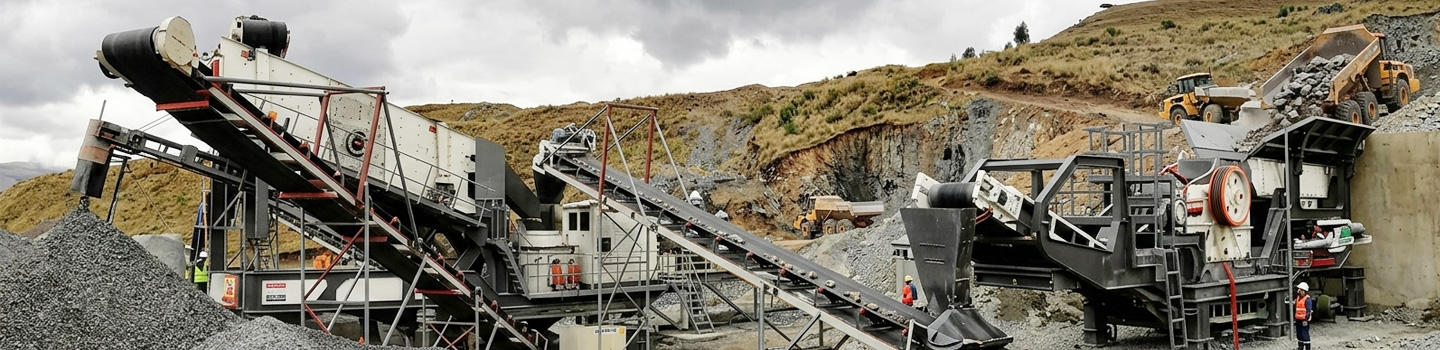
In modern aggregate production, efficiency, reliability, and consistent material output are essential to maintaining profitable operations. At the heart of many successful aggregate plants is the heavy-duty jaw crusher, a primary crushing machine designed to handle the demanding task of reducing large, irregular run-of-mine (ROM) materials into manageable sizes for downstream processing. Whether operating in stationary installations, modular skid-mounted plants, or track-mounted mobile configurations, jaw crushers remain the workhorse of aggregate production, providing the capacity, durability, and operational flexibility required across diverse geological conditions.
The Foundation of Primary Crushing
Jaw crushers perform the critical first stage of size reduction by accepting large rocks directly from blasting, excavation, or quarry operations. Their defining advantage is the ability to accommodate oversized, irregularly shaped ROM boulders that would be unsuitable for many other crushing technologies.
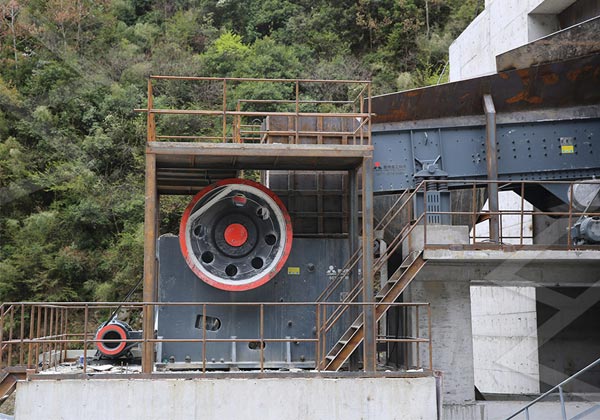
Using a compressive crushing principle, material is fed between a fixed jaw and a movable jaw. As the movable jaw advances, the material is compressed until it fractures into smaller pieces that discharge through the crusher’s adjustable bottom opening, commonly known as the closed-side setting (CSS). This straightforward mechanical principle enables jaw crushers to process substantial feed sizes while producing a controlled product suitable for secondary crushing, screening, and further processing.
Their ability to accept large feed material reduces the need for extensive preliminary size reduction, helping aggregate producers simplify plant layouts and minimize additional equipment requirements.
Versatility Across Different Rock Types
Aggregate deposits vary considerably in geological composition, abrasiveness, hardness, and fracture characteristics. Jaw crushers offer the versatility needed to process a broad range of materials, including granite, basalt, limestone, and river gravel.
In hard-rock applications, such as granite and basalt quarries, heavy-duty jaw crushers provide the compressive force required to break highly competent and abrasive rock. Robust construction, wear-resistant jaw plates, and appropriately selected crushing chamber configurations help maintain reliable performance under demanding operating conditions.
For limestone operations, jaw crushers efficiently process softer, more friable material while providing the primary reduction needed to support high-volume aggregate production. In river gravel applications, they can handle large cobbles and irregular stones, although feed composition, moisture, clay content, and particle shape must be considered when designing the feeding and crushing system.
This adaptability makes jaw crushers valuable across a wide range of aggregate operations, from large-scale commercial quarries to smaller construction material production sites.
Integration Across Different Plant Configurations
One of the strongest advantages of jaw crushers is their suitability for different plant configurations.
Stationary aggregate plants typically employ large-capacity jaw crushers as the foundation of permanent quarry installations. These systems are designed for sustained production, high throughput, and integration with heavy-duty feeders, conveyors, secondary crushers, and screening equipment. Their fixed infrastructure makes them particularly suitable for long-term operations with substantial material reserves.
Modular skid-mounted plants offer a balance between production capability and installation flexibility. Jaw crushers integrated into modular structures can be transported, assembled, and commissioned more efficiently than many conventional fixed installations. This configuration is attractive for projects requiring relocation, phased expansion, or reduced site preparation.
Track-mounted mobile plants provide another level of operational flexibility. Equipped with crawler tracks, mobile jaw crushers can move directly between working faces and crushing locations. This reduces the need to transport large quantities of unprocessed material over long distances and supports efficient operations in remote quarries, temporary construction projects, and changing extraction areas.
Across all three configurations, the jaw crusher provides the same essential function: reliable primary reduction that establishes the production capacity of the entire crushing circuit.
Economic Value and Operational Efficiency
The economic contribution of a jaw crusher extends beyond its initial crushing capacity. As the primary reduction machine, its performance directly influences the productivity and operating efficiency of downstream equipment.
By reducing large ROM boulders to a manageable size, jaw crushers enable secondary cone or impact crushers to operate within their intended feed-size ranges. Proper primary crushing also supports more effective screening, improves material flow, and helps reduce unnecessary equipment blockages.
Their relatively simple mechanical design contributes to straightforward maintenance and dependable operation. Wear components, particularly jaw plates, can be replaced as part of planned maintenance programs, helping operators manage equipment availability and operating costs.
Furthermore, the ability to accept large feed sizes can reduce the requirement for additional breaking equipment, depending on the characteristics of the deposit and the plant’s feed preparation strategy. When correctly selected and configured, jaw crushers help optimize fuel or electrical energy consumption per tonne, equipment utilization, and overall production economics.
The Importance of Correct Crusher Selection
Realizing the full value of a jaw crusher requires matching machine specifications to the demands of the application. Important considerations include maximum feed size, material hardness, abrasiveness, moisture content, required throughput, discharge setting, and downstream processing capacity.
An appropriately sized vibrating feeder, effective scalping system, and well-designed discharge conveyor are equally important. Consistent feeding helps prevent uneven loading, while removing excessive fines before crushing can improve efficiency and reduce unnecessary wear.
Regular inspection of jaw plates, bearings, lubrication systems, and drive components further supports reliable operation and extends equipment service life.
Conclusion
Heavy-duty jaw crushers remain indispensable to modern aggregate plants because they combine large-feed acceptance, robust mechanical performance, geological versatility, and economic practicality. From stationary quarry installations to modular skid-mounted systems and track-mounted mobile plants, they provide the essential first stage of material reduction across granite, basalt, limestone, and river gravel operations.
By establishing a dependable foundation for the entire crushing circuit, jaw crushers help aggregate producers improve productivity, control operating costs, and maintain consistent material supply. Their enduring value lies not simply in their ability to break large rocks, but in their ability to make the entire aggregate production process more efficient, reliable, and profitable.