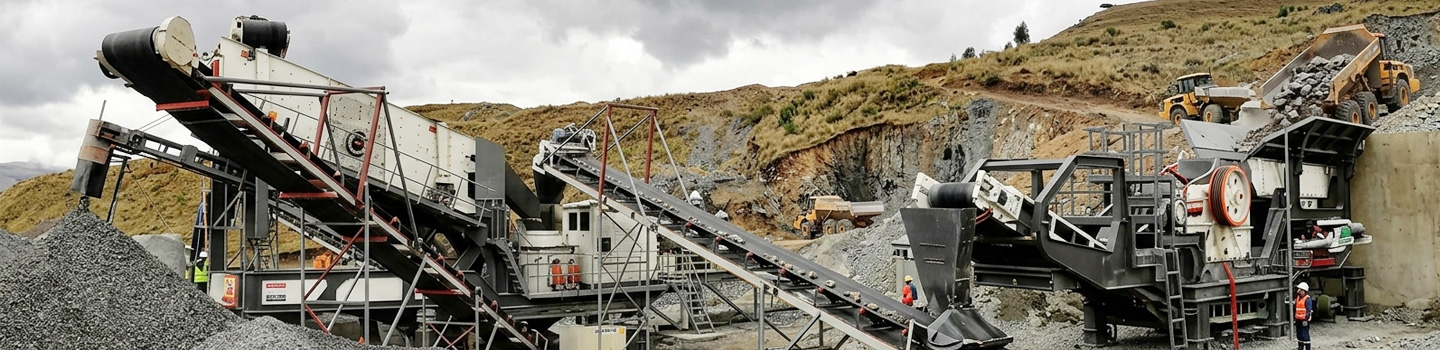
Increasing metal ore extraction capacity is rarely a matter of simply running more material through a plant. In most operations, throughput gains depend on a sharper understanding of comminution, crusher selection, and circuit integration. The crusher is often the first and most important bottleneck in a processing flow sheet: if it cannot accept the mine’s feed, control product size effectively, and operate reliably under high load, downstream milling, screening, and beneficiation systems will all inherit the constraint.
For mines seeking higher metal ore extraction capacity, the central challenge is to choose crushing equipment that can sustain higher tonnage without sacrificing product consistency, availability, or energy efficiency. This requires a performance-focused approach that goes beyond nominal capacity ratings and examines ore characteristics, crusher design, wear behavior, power draw, feed control, and maintenance strategy as one integrated system.
Why crusher performance determines overall extraction capacity
In metal ore operations, extraction capacity is not limited only by the tonnage the mine can produce. It is limited by how quickly and consistently the plant can prepare ore for downstream liberation. The crusher influences that outcome in several ways.
First, it sets the maximum acceptable feed size and the uniformity of the material entering the rest of the circuit. Poor size reduction increases recirculation, overloads screens and mills, and reduces the effectiveness of gravity separation, flotation, or leaching.
Second, the crusher influences energy efficiency. A unit that consumes excessive power per tonne or generates too much fines early in the process can reduce total plant efficiency even if its nameplate throughput appears high.
Third, reliability matters as much as nominal capacity. An operation that must stop frequently for liner changes, blockages, or adjustment loses far more effective capacity than one that runs at a slightly lower rated throughput but remains stable over long campaigns.
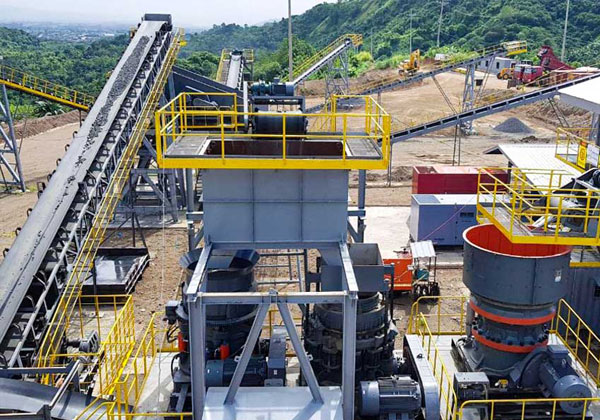
Understanding ore behavior before selecting a crusher
The best crusher for a metal ore plant depends on the ore itself. Hardness, abrasiveness, moisture, clay content, and fracture characteristics all affect crushing performance.
Hard, competent ores usually require robust primary and secondary crushing systems with high compressive strength and wear resistance. Abrasive ores accelerate liner and wear-part consumption, making metallurgy and service life critical economic variables. Sticky or clay-rich ores can cause bridging and chute buildup, often reducing the practical value of theoretical throughput ratings. Ores with variable competency may need a more flexible crushing circuit that can handle fluctuations without choking or underfeeding.
Mineralogical variability also matters. An ore body that changes from soft to hard zones can create major throughput swings unless the crusher and upstream feed system are designed to absorb those changes. In practice, the best capacity gains often come from designing for the ore’s worst-case conditions rather than its average conditions.
Choosing the right crusher type
Different crusher types support different capacity strategies. The optimal selection depends on feed size, desired product size, ore competency, and plant layout.
Jaw crushers are common in primary crushing because they are simple, rugged, and able to handle large run-of-mine feed. They are often a strong choice where the priority is reliability and moderate-to-high throughput rather than extremely fine reduction. Their limitation is that they generally provide less consistent product sizing and lower reduction ratios than some alternatives.
Gyratory crushers are often favored in high-capacity primary crushing applications. They can handle continuous feed and very large tonnages, making them well suited to major metal ore operations aiming for high plant availability. Their continuous crushing action, large feed opening, and strong capacity profile often make them the best choice where space and capital permit.
Cone crushers are widely used in secondary and tertiary crushing. They offer high reduction efficiency and good control over product size, which can be important when the downstream mill feed must be tightly managed. For operations trying to increase extraction capacity, cone crushers can reduce recirculating load and improve circuit stability when properly tuned.
Impact crushers can be effective for softer or less abrasive ores where finer product and high reduction are priorities. However, for many metal ore applications involving high abrasiveness, wear costs can rise quickly, making impact systems less attractive unless ore characteristics strongly favor them.
High-pressure grinding rolls and other advanced comminution systems may also be considered where the goal is to maximize liberation efficiency and reduce downstream grinding load. In some circuits, these technologies can contribute more to overall extraction capacity than conventional crushing alone.
Capacity is not only a crusher size issue
A common mistake is to assume that higher throughput comes from installing a larger crusher. In reality, capacity is often constrained by the entire feed and discharge system.
The feed system must deliver ore consistently. A crusher that is oversized relative to feeder capacity will still underperform if the feeder surges, starves, or delivers an uneven burden. Bin design, grizzly sizing, feeder type, and surge capacity all matter.
The discharge system must move crushed material away quickly enough to avoid choke points. Poor chute geometry, undersized conveyors, and blocked transfer points can all limit total capacity even when the crusher itself has reserve capability.
The screening circuit must also be matched to the crusher. If undersized material is not efficiently removed, the crusher may recirculate too much material and waste energy. If screens are overloaded, the entire circuit loses throughput.
In other words, a crusher should be evaluated as part of a circuit, not as a standalone machine.
Key metrics for selecting a high-efficiency crusher
When the goal is to improve metal ore extraction capacity, selection should be based on operational metrics rather than marketing claims.
Throughput under real ore conditions is the first metric. Nameplate figures are only useful if they reflect the ore type, moisture, feed size distribution, and target product size at the mine site.
Specific energy consumption is the second metric. A high-efficiency crusher should reduce tonnes per kilowatt-hour without creating excessive fines or wear.
Availability and maintainability are equally important. Liner replacement time, access to critical components, spare-part lead times, and the ease of clearing blockages all affect effective annual capacity.
Wear cost per tonne should be measured alongside operating cost. A crusher with slightly higher initial capital cost may deliver much better lifecycle economics if liner life is longer and downtime is lower.
Product size distribution is another key measure. The right crusher should not merely process ore; it should create a stable feed profile for downstream liberation and recovery.
Integration strategies that increase plant capacity
Selecting the crusher is only the first step. To actually expand extraction capacity, the crusher must be integrated into a circuit designed for steady-state performance.
One effective strategy is feed stabilization. Variable-speed feeders, surge bins, and better ore blending can reduce shocks to the crusher and improve utilization.
Another strategy is automation. Modern control systems can adjust crusher settings, feeder rates, and choke feed conditions in real time. This helps maintain a stable crushing chamber, improves product consistency, and reduces the risk of overload.
Condition monitoring also plays a major role. Vibration analysis, power-draw monitoring, temperature sensing, and liner-wear tracking allow maintenance teams to intervene before performance drops. Unplanned stoppages are among the most expensive capacity losses in a crusher circuit.
Debottlenecking the supporting equipment is often essential. New crushers can expose limitations in conveyors, screens, dust collection, or electrical infrastructure. To realize the expected increase in ore extraction capacity, the full material-handling chain must be upgraded in parallel.