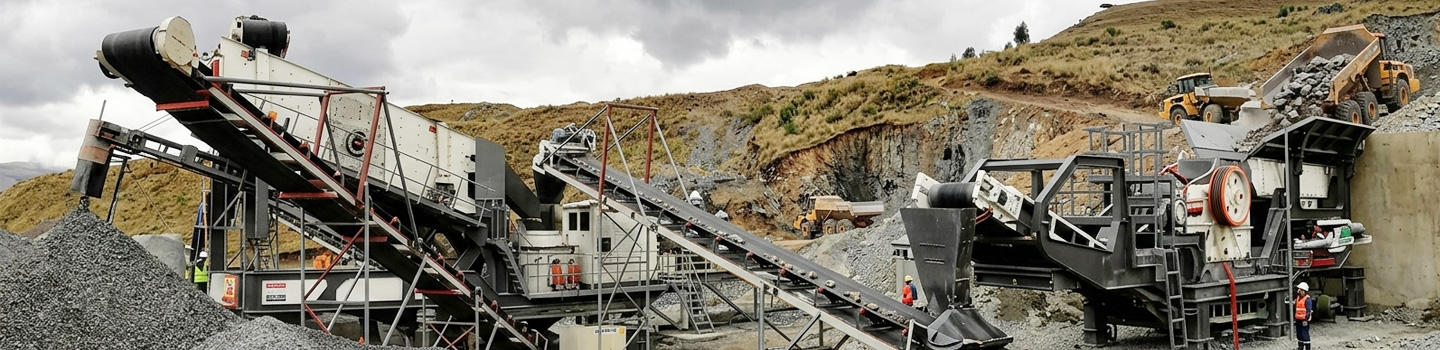
Investing in a limestone crushing plant requires careful consideration of production capacity, equipment configuration, final product specifications, and installation requirements. Whether the objective is manufacturing construction aggregates or supplying limestone feedstock to a cement factory, the total investment can range from several hundred thousand dollars to several million dollars.
In 2026, buyers can choose between stationary crushing plants, modular installations, and track-mounted mobile crushing fleets. Each configuration offers different advantages in capital expenditure (CAPEX), operational flexibility, production efficiency, and long-term maintenance costs.
This guide provides indicative price ranges, explains the major cost drivers, and outlines the additional expenses that should be included when preparing a project budget.
1. Limestone Crushing Plant Prices by Production Capacity
The production capacity, measured in tonnes per hour (t/h), is one of the most important factors determining equipment investment. However, two plants with identical nominal capacities can have significantly different prices depending on their crushing circuits and finished-product requirements.
The following figures are indicative 2026 budget estimates in US dollars. They represent complete equipment-package allowances rather than guaranteed supplier quotations.
Estimated equipment investment by capacity and application
| Capacity | Stationary modular: aggregates | Stationary modular: cement feed | Track-mounted mobile fleet: aggregates |
|---|---|---|---|
| 100 t/h | $180k–$350k | $220k–$400k | $350k–$650k |
| 200 t/h | $250k–$520k | $300k–$600k | $450k–$850k |
| 300 t/h | $350k–$700k | $400k–$800k | $600k–$1.1m |
| 400–500 t/h | $500k–$1.0m | $600k–$1.2m | $850k–$1.6m |
| 600+ t/h | $850k–$1.8m+ | $1.0m–$2.2m+ | $1.3m–$2.8m+ |
For cement raw meal feed, a comparable track-mounted fleet may require approximately $450,000–$3 million or more, depending on capacity and configuration.
These ranges assume conventional limestone processing, commercially available equipment, and reasonably standard electrical and control packages. They exclude land acquisition, taxes, major infrastructure, and some project-specific installation expenses.
Stationary plants generally provide better long-term economics for permanent quarries because they can accommodate larger equipment, longer conveyors, and optimized material-handling systems. Modular plants offer a compromise, combining prefabricated equipment sections with relatively straightforward site assembly.
Track-mounted mobile fleets require a higher equipment investment because they incorporate crawler chassis, hydraulic systems, integrated conveyors, and mobile screening equipment. However, they offer greater flexibility for contractors and operations involving multiple quarry locations.
As a reference point, published 2026 supplier estimates place conventional 200 t/h stationary installations within approximately $200,000–$350,000, with more sophisticated three-stage configurations reaching $380,000–$520,000.
2. How End-Product Specifications Affect Plant Pricing
The required final product determines the crushing stages, screening arrangements, and equipment specifications.
Construction aggregates
Aggregate producers typically manufacture several commercial fractions, including:
-
0–5 mm manufactured sand and fines.
-
5–10 mm and 10–20 mm concrete aggregates.
-
20–40 mm road construction aggregates.
-
Larger graded materials for foundations and infrastructure.
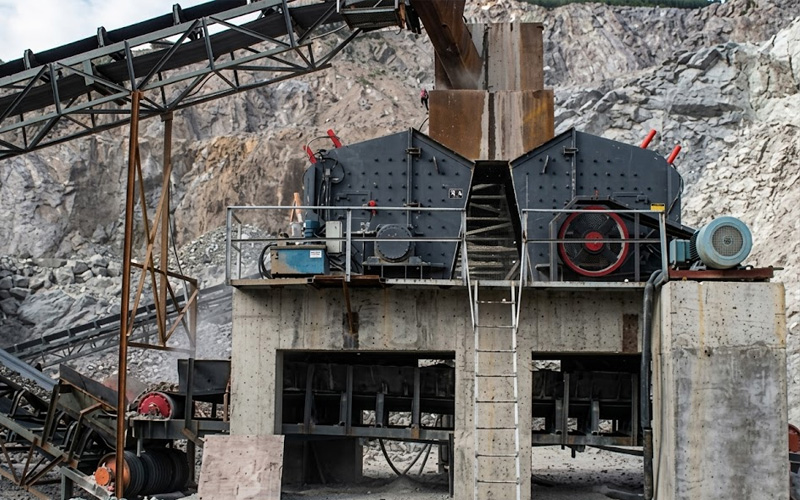
These products require effective particle-size classification and, in many cases, improved particle shape. Consequently, aggregate plants often incorporate secondary impact crushers, multi-deck vibrating screens, and optional tertiary crushing equipment.
Cement raw meal feed
Cement production requires limestone to be reduced to a controlled feed size suitable for raw milling and subsequent blending.
Depending on the cement plant’s specifications, the crushing system may use a heavy-duty hammer crusher, impact crusher, or jaw-and-secondary-crusher arrangement.
The emphasis is on consistent feed sizing, reliable throughput, and compatibility with downstream raw mills. Multiple finished aggregate fractions are generally unnecessary, potentially reducing screening and conveying requirements.
However, cement applications may require additional sampling, online monitoring, and integration with the factory’s material-handling and automation systems.
3. Technical Factors That Influence Equipment Costs
Primary and secondary crusher selection
The primary crusher handles large limestone blocks, making its capacity and feed opening essential.
Jaw crushers are widely used for primary reduction because they handle large feed sizes and offer robust mechanical construction. Impact crushers can provide higher reduction ratios and are particularly attractive for relatively soft limestone.
For secondary crushing, impactors are frequently selected for construction aggregates because they produce well-shaped particles. Jaw-and-cone circuits offer an alternative where controlled reduction, operating conditions, or specific product requirements justify their use.
Crusher selection affects initial purchase costs, installed power, replacement wear parts, and maintenance expenditure.
Vibrating screens and conveyor layouts
Multi-deck vibrating screens separate limestone into different product sizes. A basic installation may use one screen, while larger aggregate operations require multiple screening stages and recirculation conveyors.
Conveyor costs depend on belt width, length, elevation, transfer points, structural steel, and stockpile arrangements. Poorly designed layouts can increase material handling, energy consumption, and maintenance costs.
Dust suppression and automation
Dust suppression systems may include water sprays, enclosed transfer points, extraction equipment, and bag filters.
Automation packages range from basic motor-control panels to centralized PLC systems with touchscreen interfaces, interlocks, remote monitoring, and production reporting.
More advanced automation increases initial CAPEX but can improve operating consistency, equipment protection, and labor productivity.
4. Civil Foundations, Installation, and Commissioning Costs
The equipment purchase price is only part of the overall project investment. Civil engineering, installation, and commissioning can add substantial costs, particularly for permanent stationary installations.
Civil foundations and site preparation
Stationary plants generally require reinforced concrete foundations for crushers, screens, feed hoppers, and conveyor support structures. Additional expenses may include excavation, ground stabilization, drainage, access roads, retaining walls, and electrical infrastructure.
Modular installations can reduce certain structural requirements, but they still need properly engineered foundations and equipment supports.
Track-mounted plants usually require less permanent concrete construction. Nevertheless, operators must prepare stable working surfaces, drainage systems, access routes, and suitable maintenance areas.
Mechanical installation and electrical commissioning
Installation expenses include equipment positioning, steel structure assembly, conveyor alignment, electrical cabling, control-panel connections, and safety-system integration.
Commissioning typically involves:
-
Individual equipment testing and synchronization.
-
No-load and loaded operational trials.
-
Capacity and product-size verification.
-
Automation calibration and safety inspections.
-
Operator training and maintenance handover.
For preliminary budgeting, the following allowances can be useful:
| Additional project expense | Indicative budget allowance |
|---|---|
| Civil works and foundations | 8–15% of equipment cost |
| Mechanical and electrical installation | 5–10% |
| Commissioning and operator training | 2–4% |
| Freight, logistics, and handling | 3–8% |
| Contingency allowance | 5–10% |
These percentages are planning allowances, not fixed industry rates. Actual costs depend on geography, labor availability, soil conditions, equipment origin, and project complexity. Some turnkey supplier quotations already include installation or commissioning, so buyers should avoid double-counting these expenses.
5. Example: Budgeting for a 200 t/h Limestone Crushing Plant
Consider a quarry planning a 200 t/h stationary plant for construction aggregate production.
A typical configuration could include a vibrating feeder, primary jaw crusher, secondary impact crusher, three-deck vibrating screen, belt conveyors, dust suppression equipment, and a centralized electrical control system.
Illustrative project budget
| Investment component | Estimated cost |
|---|---|
| Primary and secondary crushers | $130,000 |
| Vibrating feeder and screens | $45,000 |
| Conveyors and transfer systems | $55,000 |
| Electrical and automation systems | $30,000 |
| Dust suppression equipment | $15,000 |
| Equipment subtotal | $275,000 |
| Civil works and foundations | $30,000 |
| Installation and commissioning | $25,000 |
| Logistics and contingency | $25,000 |
| Estimated project investment | $355,000 |
This example represents a preliminary budgeting scenario rather than a supplier quotation. Land, taxes, major utility connections, and working capital are excluded.
6. How to Obtain an Accurate Limestone Crushing Plant Quotation
Before purchasing equipment, buyers should prepare a detailed technical specification covering:
-
Required production capacity and operating hours.
-
Maximum limestone feed size and material hardness.
-
Desired finished-product sizes and grading tolerances.
-
Construction aggregate or cement raw material application.
-
Stationary, modular, or track-mounted configuration.
-
Dust-control, automation, and environmental requirements.
-
Installation location, electrical supply, and site conditions.
Suppliers should provide an itemized quotation identifying equipment models, motor power, processing capacity, included conveyors, screen specifications, warranty conditions, delivery terms, installation scope, and commissioning services.
Comparing complete project costs rather than individual crusher prices helps prevent unexpected investment overruns.