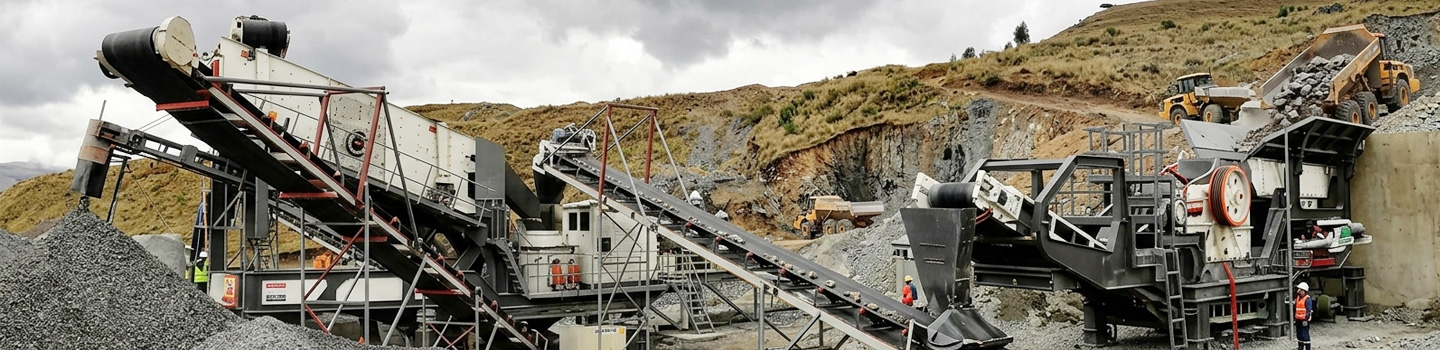
Replacing legacy, low-efficiency mechanical setups with advanced, high-capacity crushing infrastructure completely redefines the economics of the pit. Modern automated crushing stations do not merely break rock; they act as the primary engine for accelerating net production yield per hour. By matching the brute crushing force of high-velocity flywheels with precision-engineered crushing chambers, these systems eliminate the need for expensive secondary breaking at the blast face, streamline downstream sizing, and turn raw geological formations into revenue at an unprecedented pace.
Eliminating the Bottleneck: Legacy Systems vs. Modern Crushing Infrastructure
Conventional quarry setups often suffer from structural processing limits. Older generations of jaw and cone crushers rely on massive machine mass rather than optimized kinematics. This results in sluggish processing speeds, high energy consumption per ton, and frequent packing of the crushing chamber when sticky or moist fines enter the feed. When the primary station slows down, the entire quarry stalls.
Transitioning to an engineered, automated crushing circuit solves this systemic slow-down. High-capacity, modern infrastructure balances the material flow from the initial dump hopper straight through to the final stockpiles. The technical performance gap between outdated machinery and advanced processing systems shows exactly how modern engineering captures hidden margins:
| Operational Metric | Outdated Conventional Setup | Modern High-Capacity Automated Plant |
|---|---|---|
| Primary Feed Acceptance | Requires intensive secondary blasting/hammering of oversized rock | Accepts massive run-of-mine feed directly, up to 920 mm |
| Chamber Kinematics | Slow stroke, low-speed eccentric movement causing material packing | High-velocity dynamics maximizing particle-on-particle crushing |
| Operational Continuity | Frequent downtime for manual discharge setting adjustments | Automated hydraulic adjustment under load for constant throughput |
| Fines Generation | Excessive waste fines produced due to inefficient compression crushing | Optimized cubical shape with minimal out-of-spec waste |
The Primary Powerhouse: C6X145 Jaw Crusher Performance Analysis
The entire production velocity of a quarry is dictated by the primary crushing station. If the first machine cannot accept raw, large-scale run-of-mine material, the entire plant operates under a handicap. The Liming C6X145 Jaw Crusher functions as an absolute powerhouse at this critical entry point. Engineered with a heavy-duty detachable frame and a high-inertia, precision-balanced flywheel, this machine brings intense field energy to the quarry floor. It swallows raw rock with a maximum feed size of up to 920 mm, completely eliminating the costly, time-consuming requirement for secondary hydraulic hammering at the muck pile.
Powering through tough formations with a 200 kW motor, the C6X145 converts raw electrical energy into sheer crushing force. The optimized V-shaped crushing chamber combines a large stroke with an aggressive nipping angle, ensuring that material is broken immediately upon entry and rapidly discharged. This design delivers a staggering production capacity ranging from 322 to 950 tons per hour. The steady roar of the flywheel signals a continuous, uninterrupted flow of material, keeping haul trucks moving without delay and providing an immediate boost to the initial equipment investment recovery.
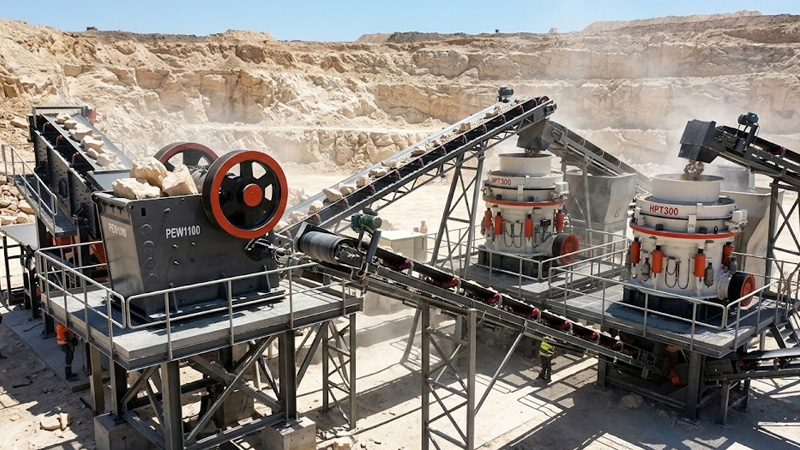
Optimizing Secondary Stage Throughput: HST250 Cone Crusher Dynamics
Once the primary stage reduces the run-of-mine material, the secondary processing stage must handle the massive volume without creating a secondary bottleneck. This is where the Liming HST250 Single Cylinder Hydraulic Cone Crusher demonstrates its optimized throughput capabilities. Legacy secondary crushers often fail to match the pace of high-output jaw crushers, causing material to back up in intermediate surge piles. The HST250 is explicitly designed to handle this surge, turning the coarse output of the primary stage into highly sellable, cubical aggregate at maximum velocity.
Integrating a single hydraulic cylinder for mainshaft support, the HST250 allows for real-time adjustment of the closed side setting, even while operating under a full load of hard rock. This hydraulic system provides automated overload protection, letting uncrushable tramp iron pass without stopping production or damaging the internal components. By maintaining a constant, optimized crushing speed and combining it with the specific stroke required for high-efficiency reduction, the HST250 ensures the secondary stage perfectly matches the high-output pace of the primary station. This synchronized flow maximizes the net production yield per hour while driving down the overall expenditure per shift.
Production Note: True quarry profitability is achieved when the capacity of the primary station aligns perfectly with the throughput of the secondary circuit. Utilizing the C6X145 jaw crusher alongside the automated HST250 cone crusher creates an engineering harmony that eliminates the classic “starve or flood” cycle common in unoptimized quarry operations.
—
Driving Massive Quarry Output: Total Sellable Yield per Hour
The ultimate contribution of stone crushers to quarry operations comes down to the quality and volume of the final stockpile. Modern crushing stations leverage advanced particle-on-particle compression technology within the crushing chambers. Instead of simply forcing the rock against a steel jaw or mantle liner, the material is compressed against itself at high speeds. This mechanical action breaks down internal stress lines and micro-fissures within the stone, yielding a highly consistent, cubical product that easily meets strict international aggregate specifications.
By producing an immediate, high-quality shape in the primary and secondary phases, the workload on final finishing screens is drastically reduced. Recirculation loads drop to a fraction of traditional levels, meaning the plant stops wasting energy re-crushing the same material repeatedly. Every ton of rock entering the plant is converted into sellable product in fewer passes, accelerating capital payback velocity and generating massive hourly output that directly affects the quarry’s daily bottom line.